





Headquartered in Indianapolis, Indiana, we serve the specialty chemicals industry with locations in the heart of manufacturing hubs in the U.S. and Europe. We produce a variety of solvents, intermediates, specialty fuels, and other specialty products, as well as offer industry-leading Custom Manufacturing services.
More Than a Science Demo: Monument’s STEAM Lab Event Gets Students Thinking Bigger
May 7th, 2026
 Last year, the experiments wowed the students. This year, the students became part of them.
What started as a fun day of science demos has evolved into something bigger: a hands-on experience where students aren’t just watching reactions happen—they’re helping create them!
And according to teachers, they’re still talking about it long after the day ends.
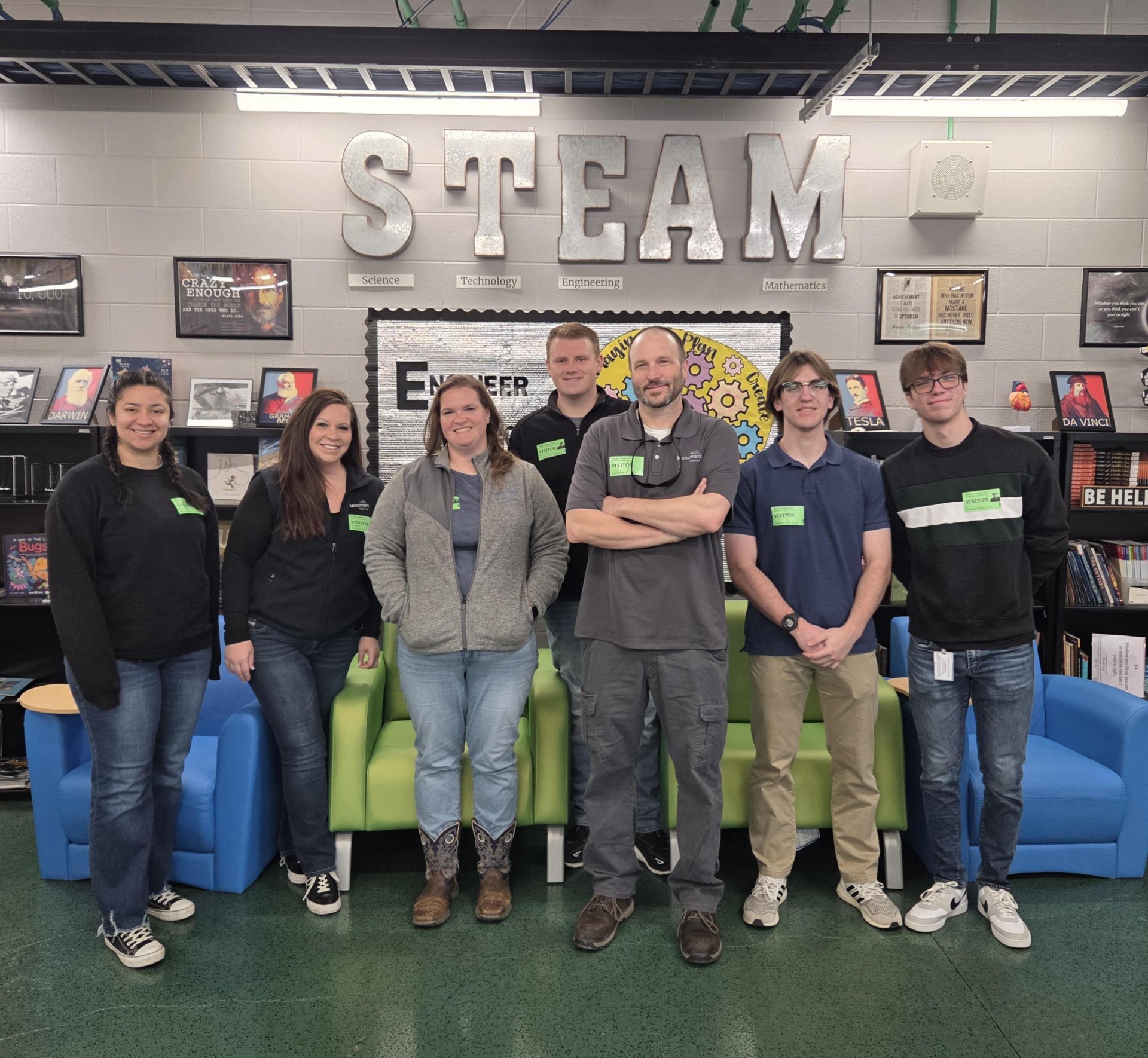
For the third year in a row, Monument Chemical Brandenburg, KY team members again “wowed” local students at the STEAM Lab classroom, created by Meade County Schools, during an interactive STEAM experience designed to make science feel real, approachable, and fun.
“This year, the impact felt deeper because students didn’t just experience science—it was incredibly interactive, and every student played a role in the simulation,” shared Gifted and Talented Teacher Kala Robinson.
That shift showed up everywhere throughout the event. Students practiced reaction concepts with worksheets and life-sized models. They acted out molecule movement. They connected chemistry concepts to everyday things like batteries, freezing temperatures, and materials they use all the time.
And yes…there was still liquid nitrogen.
A lot of liquid nitrogen.
“Ping pong! Ping pong!”
 For Monument volunteer and chemist Jarrod Eubank, one of the most rewarding parts was seeing students go from quietly observing…to fully jumping in.
“They were great this session and all participated well throughout,” Jarrod shared. “But I think doing the practice worksheet model helped them really feel more involved once we performed the life-sized version.”
And then came the crowd favorite.
“They loved the liquid nitrogen demo,” Jarrod said, “but they really seemed to get engaged when we got them chanting ‘ping pong! ping pong!’ waiting for the next one to shatter.”
The demonstrations may have created the excitement, but the real goal was helping students connect science to the world around them.
Making science feel real
 Throughout the sessions, Monument volunteers worked to translate complex chemistry concepts into something students could immediately understand.
“This time we looked at redox reactions and electron transfer, how they apply to a battery cell, and then had them think about ways a battery could go ‘dead’—and how they could use what they learned to recharge it,” Jarrod explained. “They seemed to really connect with this.”
Another standout activity involved a “molecule dance,” where students physically acted out how atoms and molecules slow down under extreme cold temperatures.
“It helped demonstrate how we use concepts like liquid nitrogen to slow down molecules so we can better study materials,” Jarrod said.
For students, it transformed chemistry from something in a textbook into something they could see, move through, and experience themselves.
And according to Kala, those experiences stick.
“Students are still talking about specific experiments from last year,” she shared. “They always remember it as one of their favorite days.”
Even more importantly, she’s seeing the impact continue back in the classroom.
“They are able to make connections to content as we explore similar curriculum later. I’ve seen increased curiosity, with more students asking thoughtful why? and what if? questions.”
Building the future—one question at a time
 Over time, the STEAM Lab experience has become more connected to classroom goals and curriculum, making it feel less like a one-time event and more like a meaningful extension of learning.
But for Monument volunteers, the bigger impact may be helping students see themselves in science careers in the first place.
“I think it’s more important than ever to encourage kids to better understand and appreciate science from a young age,” Jarrod shared. “And let them see that science can be fun as well as educational.”
“Programs like this help students see that science isn’t just something in a textbook—it’s part of everyday life and the future they can help shape,” added Tonya Jeffries, HR Manager at the Monument Brandenburg site. “When students get the chance to participate, ask questions, and experience science firsthand, curiosity grows quickly. That’s what makes days like this so meaningful.”
And if this year proved anything, it’s that curiosity grows quickly when students are invited to participate—not just observe.
Which, of course, means next year’s challenge may be even bigger!
Posted in the categories Our Commitments, Top News & Events.
