
Ready to Rescue: Monument Chemical Bayport’s Emergency Medical Responders
October 21st, 2019
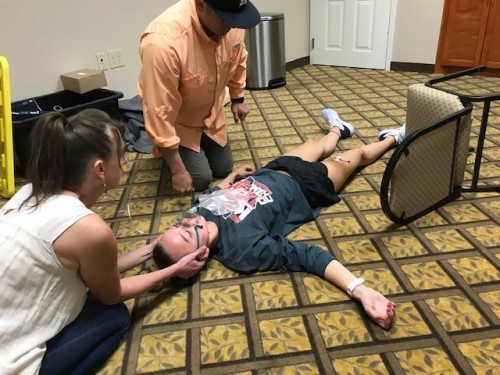
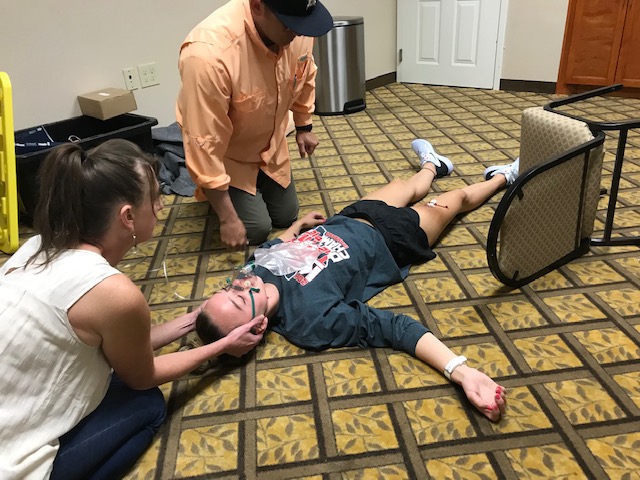 Imagine that you walk into a meeting room and find a co-worker lying on the floor unconscious and barely breathing. What would you do? First, you’d call 9-1-1. But what else would you do until the paramedics arrive on the scene?
If you’re one of four Monument Chemical Bayport employees who recently received emergency medical response (EMR) training, you would know exactly what steps to take to try to resuscitate the person and, hopefully, to save a life.
“The first two to three minutes count more than anything else in an emergency situation,” said one of the recent trainees, Mark Kinney, Shift Supervisor, Operations. “If you’re on scene because someone has had a heart attack, stroke, or can’t breathe, what you do during that time may determine what the rest of that person’s life will be like – whether they will be fully functional or debilitated or even whether they survive. If you know how to assess the situation and prevent complications, it can make all the difference in the outcome for that person.”
 Monument has been training employees in emergency medical response since 2009 as part of the company’s Health, Safety and Environment, (HSE) commitment to “put people first by ensuring safety is priority number one.” More than 30 employees have now been trained across Monument’s Houston, Baytown, and Bayport operations.
“Bayport is Monument Chemical’s latest acquisition, and we put a priority on training some Bayport employees in emergency medical response as soon as possible,” said Stacy Johnson, Houston Area HSSE Manager. “We like to have at least two medics on each shift so they can partner up and help each other.”
In addition to Mark Kinney, the other Bayport trainees included; Kay Jones, Senior Administrative Assistant; Mark Little, HSSE Specialist on-site; and Danielle Wallner, Shift Operator, Operations.
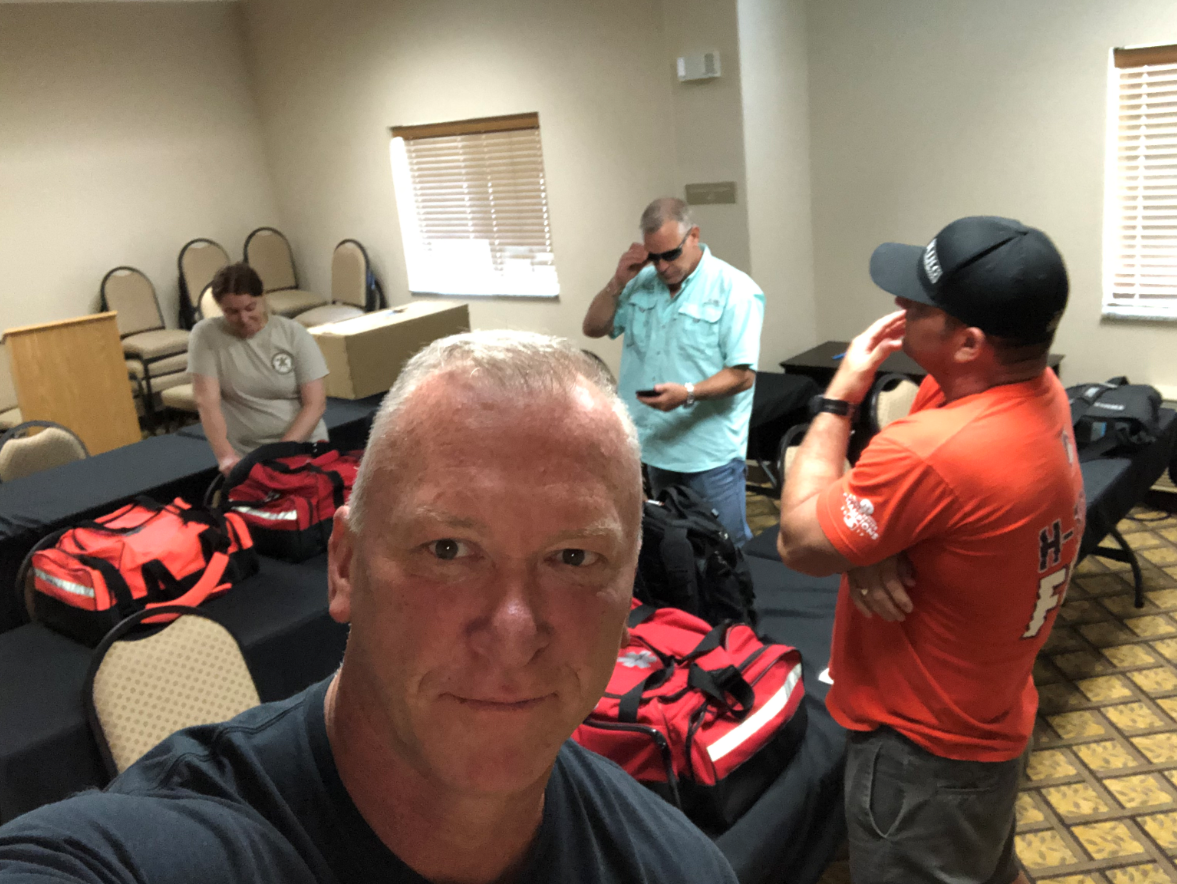 Monument looks for volunteers who are willing to make a substantial commitment of time. The initial one-week training involves 40 hours in the classroom and four or five hours per day at home. Subsequently, the volunteers must commit to at least eight hours of continuing education training every other month in addition to the time they are on duty for emergency medical response at work.
Joshua Cools of Dependable Resuscitation Training has been providing the training for Monument since the program’s inception in 2009. “He’s a flight paramedic. That means he’s the best of the best,” said Stacy. “He’s the person who comes on scene when there’s been a major accident or emergency and treats the patient during a helicopter flight to the hospital.”
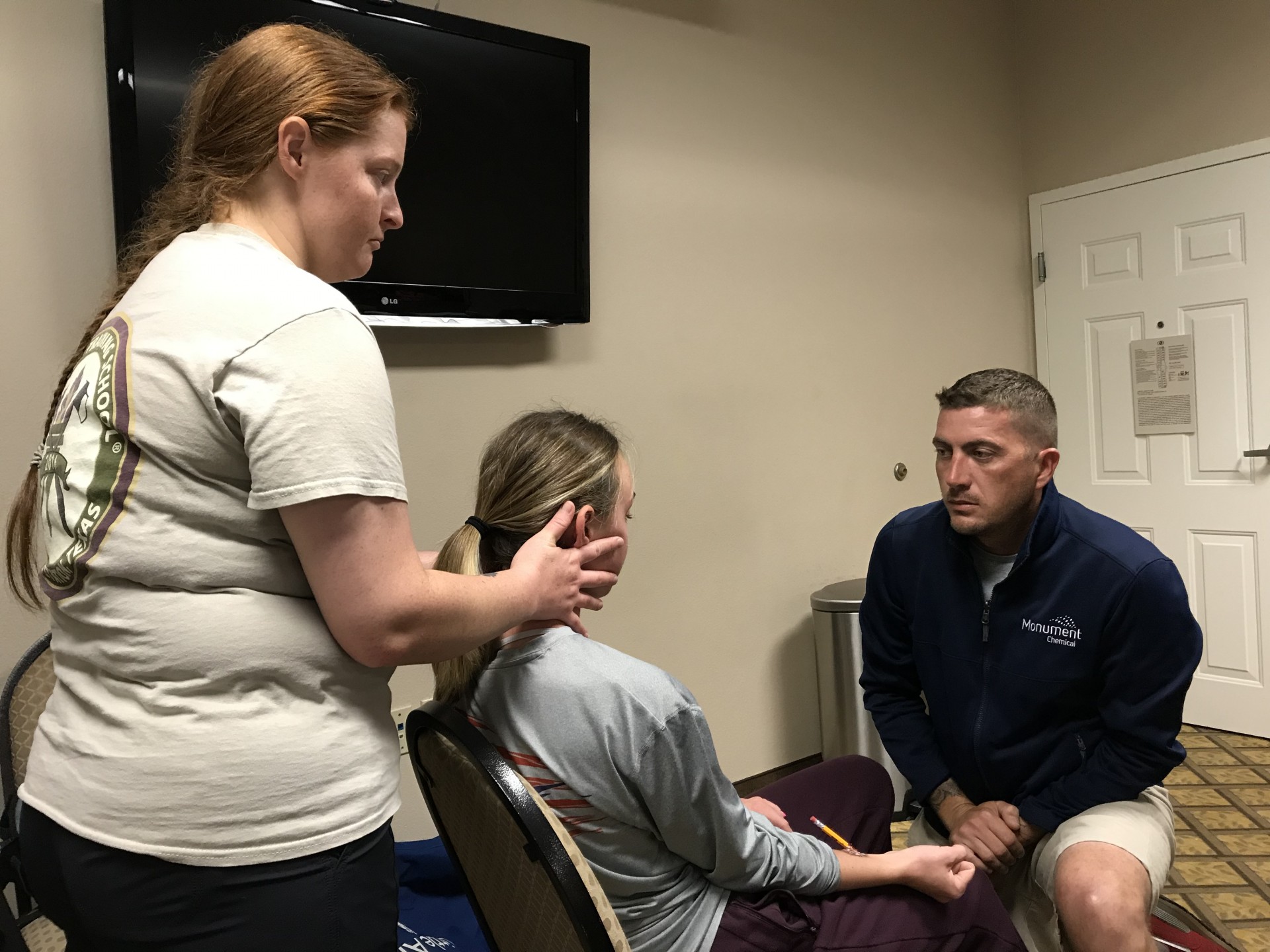
In the classroom, Cools sets up scenarios for the trainees. They come into the room with no knowledge of what they will find there. They are expected to assess the patient based on their training, determine the problem, and give the proper treatment and care needed until the ambulance and EMTs arrive.
“We have the same exact training as EMT Basics receive, just without the clinicals in the emergency room or riding along in an ambulance,” said Mark K. “We learn everything from putting Neosporin and a band-aid on a simple cut to putting on a tourniquet and saving a person’s life by keeping them from bleeding out.”
“It can go from a band-aid to bad very rapidly,” said Mark L. “You have to quickly assess the patient on what you see.”
The scope of problems they are trained to handle range from the basics, such as detecting low blood sugar in a patient, to dealing with a traumatic injury, such as someone falling from a 30-foot scaffolding.
“We are trained not only for the industrial side, but also away from work,” noted Mark K. “The company gave us medical bags to carry at all times with everything we would need to care for a patient on a car accident scene.”
Monument’s emergency medical responders also provide preventive care. Employees can stop by the medical room to have their blood sugar, blood pressure, and other vital signs checked. “This is a really great, proactive measure for the company,” said Mark K. “It helps everyone on site.”
Why did these Monument folks volunteer for such a big responsibility?
“You want to be able to help somebody if something happens,” said Kay.
“You have to have the heart and drive for it and all around caring for human life,” added Mark L.
“For me, it was personal,” said Mark K. “We once had an incident with my son. It almost cost him his life, but because of my wife’s training as a combat medic and my training in the military, we were able to save him. It just made sense to take this opportunity with a company that’s willing to provide this kind of training. Having kids, having friends with kids, working with other employees who have children – I wouldn’t want to be in a position where I couldn’t do anything to help them.”
“It’s not often that you hear of a company investing in the safety and health of employees like Monument Chemical does,” emphasized Mark L. “It’s rare to find that.”
“A lot of companies talk the talk on safety first, employees first, but very few actually walk the walk like Monument,” noted Mark K.
“We’re proud to be part of that commitment,” said Kay.

Categories
Recent Articles
- 06/4/26Unlock the Power of AI at Monument – Join Our Upcoming Summer Sessions!
- 06/3/26Update Your Workday Profile. Unlock Possibilities – and a Chance to Win a Gift Card
- 06/1/26Our Q2 2026 Work Anniversaries — Congratulations!
- 05/29/26Stephen Cundiff Accepts New Role as EHS Manager - Brandenburg
- 05/28/26Monument Houston Earns Eighth Straight Pinnacle Award for Rail Safety
- 05/22/26Monument Engineer Alexandra Bledsoe Featured in CPI Young Professionals Spotlight
- 05/21/26Expand Your Professional Development — Free Continuing Education Opportunities Available
