
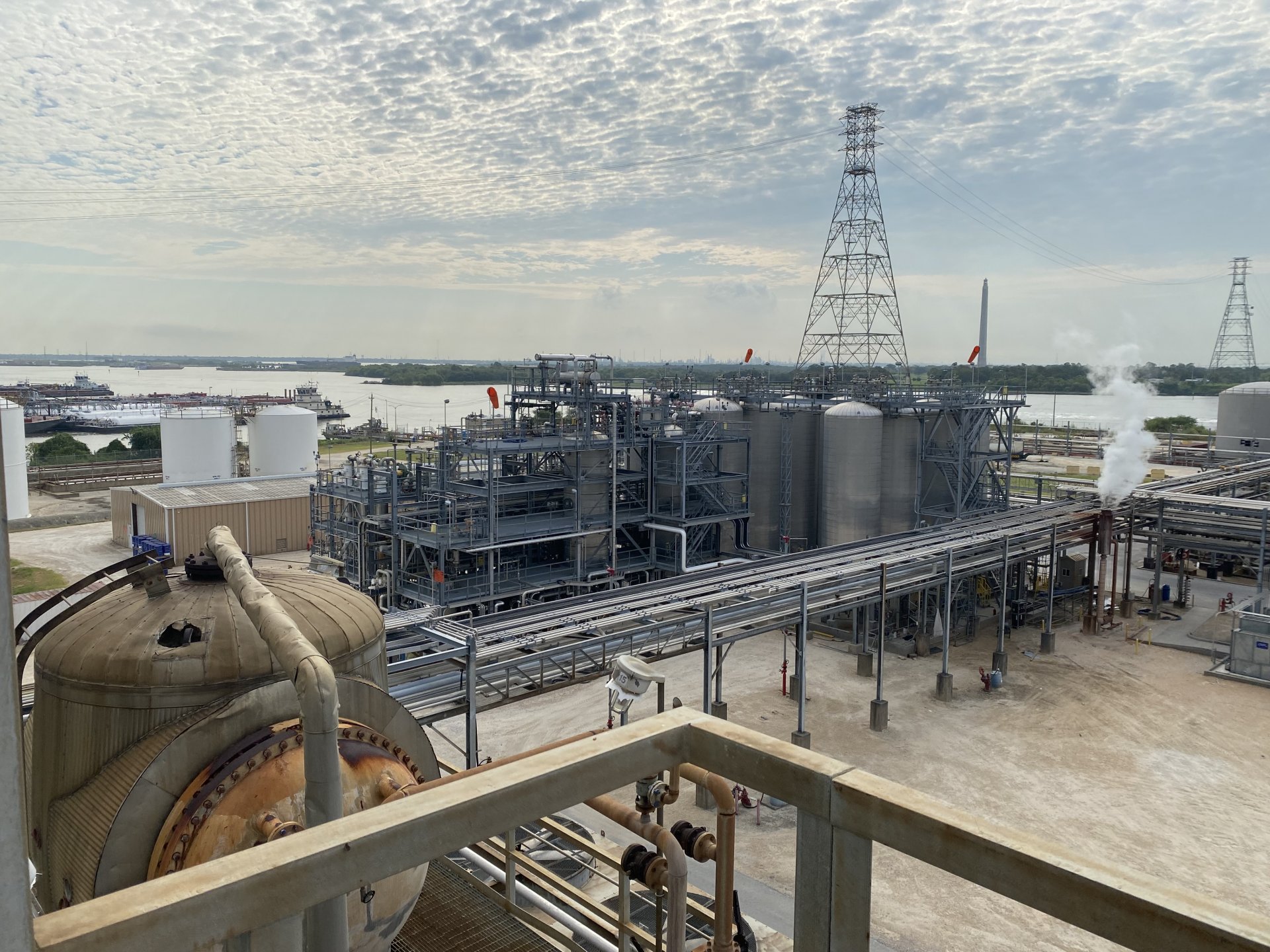
Houston Polysulfide Unit Steps Up with Major Reduction in Cycle Times
September 16th, 2024



 In an attempt to fill a gap in the growing market and address the needs of one of our key partners, Monument Houston opened up our new Polysulfide Unit in 2021. What followed in the years to come were some inevitable growing pains, but when demand hit an all-time high this past year, it was time for a major effort to address the issues slowing our cycle times — and the results were just as significant.
“This was a new area for many of our team members, but they were all up for the biggest challenge,” Bri Borders, Production Engineer, explained. “In order to address the issues we were facing, we really had to learn what the process should be compared to the things we were used to doing. We knew we had to start with a ton of discovery, and then test out new processes to learn what worked best.”
Bri and Operations Manager, Ted Olszanski, worked very closely with our operations team, observing where they experienced problems and investigating what could make a difference in our cycle times, no matter how small.
It was a true team effort, involving members from R&D, the labs, operations, and more, with a high level of focus and persistence across the board, studying trends and growing their understanding of the process at the deepest level.
“Working directly alongside the operations team, we were able to get a lot of great feedback and compare it with our data to see a lot of it aligned,” Bri continued. “We bounced several ideas off of one another, and when we did try something new, we documented every change to better understand how it affected the process, negatively and positively.”
“Bri and Ted did such an awesome job at tackling the incremental changes that really add up throughout the process,” Jake Moehring, Site Leader, shared. “From the order of operations and paperwork to capital-related adjustments. And our head operators were really great at training their team. When the Polysulfide unit first started up, we had a handful of people who gained experience running heavy volumes, so they played a huge role in helping newer team members get into practice and reestablish what this unit can look like.”
And with each little win, the momentum only increased, leading to bigger and more substantial achievements. “Our gains in this process were directly correlated to the reduced struggles we faced,” Ted shared. “When we started, there were some challenges with the batches that required labor intensive actions from our operators. As we started to get these items under control, the team became more confident and eager to enhance the process, which led to significant improvements in batch times.”
One of the biggest wins was with our filtration. “Introducing a new product to an existing filtration system doesn’t guarantee the same compatibility,” Jake explained. “And changing filters takes a lot of time. We tested multiple types of filters, different temperatures, and charge balances of the raw materials to find the right combination that would cut what previously required 3-4 filters down to just one.”
Another big win was in the sparging process. This was a result of the team intentionally straying from what was previously done to understand what needed to change and why. After multiple trials, they found the ultimate time to purify the materials, reducing the stripping by about an hour.
All of the efforts over the last eight months truly paid off. Overall, Houston’s Polysulfide unit went from 60%-70% utilization to ~90%+ utilization, which fully meets all contract volumes.
With demand only expected to increase, there will only be more opportunities for the team to improve.
“We intend on continuing to make the incremental changes that improve the quality of our everyday operations,” Jake shared. “We also plan to expand the unit and production moving forward. There’s a lot of exciting possibilities for us!”

Categories
Recent Articles
- 06/4/26Unlock the Power of AI at Monument – Join Our Upcoming Summer Sessions!
- 06/3/26Update Your Workday Profile. Unlock Possibilities – and a Chance to Win a Gift Card
- 06/1/26Our Q2 2026 Work Anniversaries — Congratulations!
- 05/29/26Stephen Cundiff Accepts New Role as EHS Manager - Brandenburg
- 05/28/26Monument Houston Earns Eighth Straight Pinnacle Award for Rail Safety
- 05/22/26Monument Engineer Alexandra Bledsoe Featured in CPI Young Professionals Spotlight
- 05/21/26Expand Your Professional Development — Free Continuing Education Opportunities Available
